Which of the 5 eufy models fits you
Cheapest way into self-emptying: the X8 Pro at £249, with a mop attachment, an active detangling roller brush for pet hair, and its own self-empty station.
Best all-round value: the X10 Pro Omni at £311.20, 8,000Pa suction, dual mops with auto washing and hot-air drying, AI obstacle avoidance, and below 60dB running noise, the model most independent reviewers we found reference as eufy's strongest current all-rounder.
Mid-range step-up: the C28 Omni (£479) and E25 Omni (£598.99) both add a HydroJet self-clean roller mop over the X10 Pro Omni's dual mop pads, at a real price step.
Flagship, thick carpet and hygiene-conscious homes: the Omni S2 at £1,359, eufy's highest suction at 30,000Pa with a chassis that auto-lifts to clean carpet up to 5cm thick, and a genuinely new base station that generates a hypochlorous-acid and ozone-water solution specifically to keep the mop-wash water clean, covered in more depth below.
Today's deals
5 eufy deals live right now
All 5 are robot vacuums with mop function. Prices checked 2 August 2026. Tap any deal to view it on Amazon.
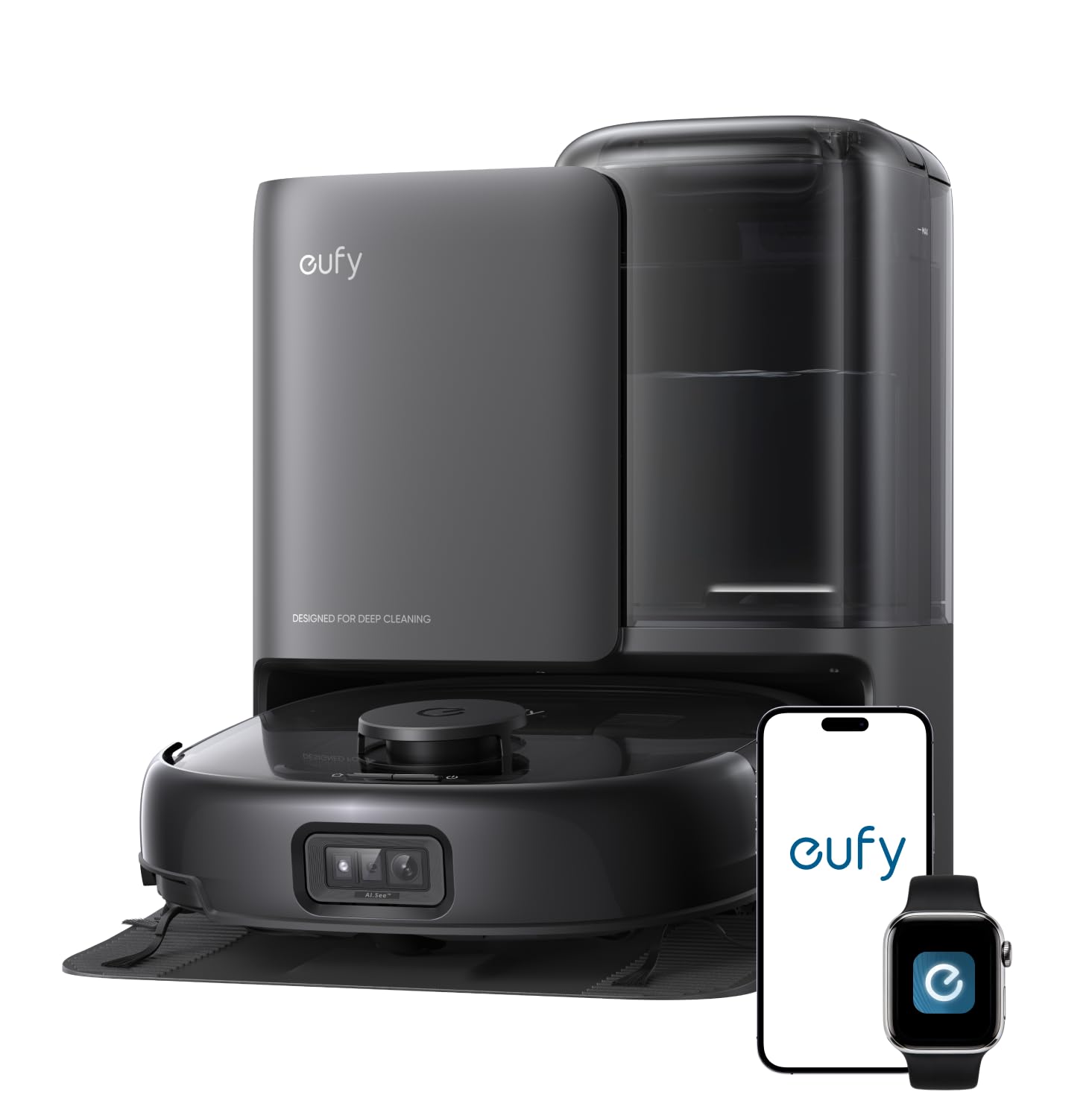
eufy E25 Omni, Robot Vacuum Cleaner with Mop,HydroJet Self-Clean Roller Mop
A robot vacuum and mop with HydroJet self-cleaning roller mops.
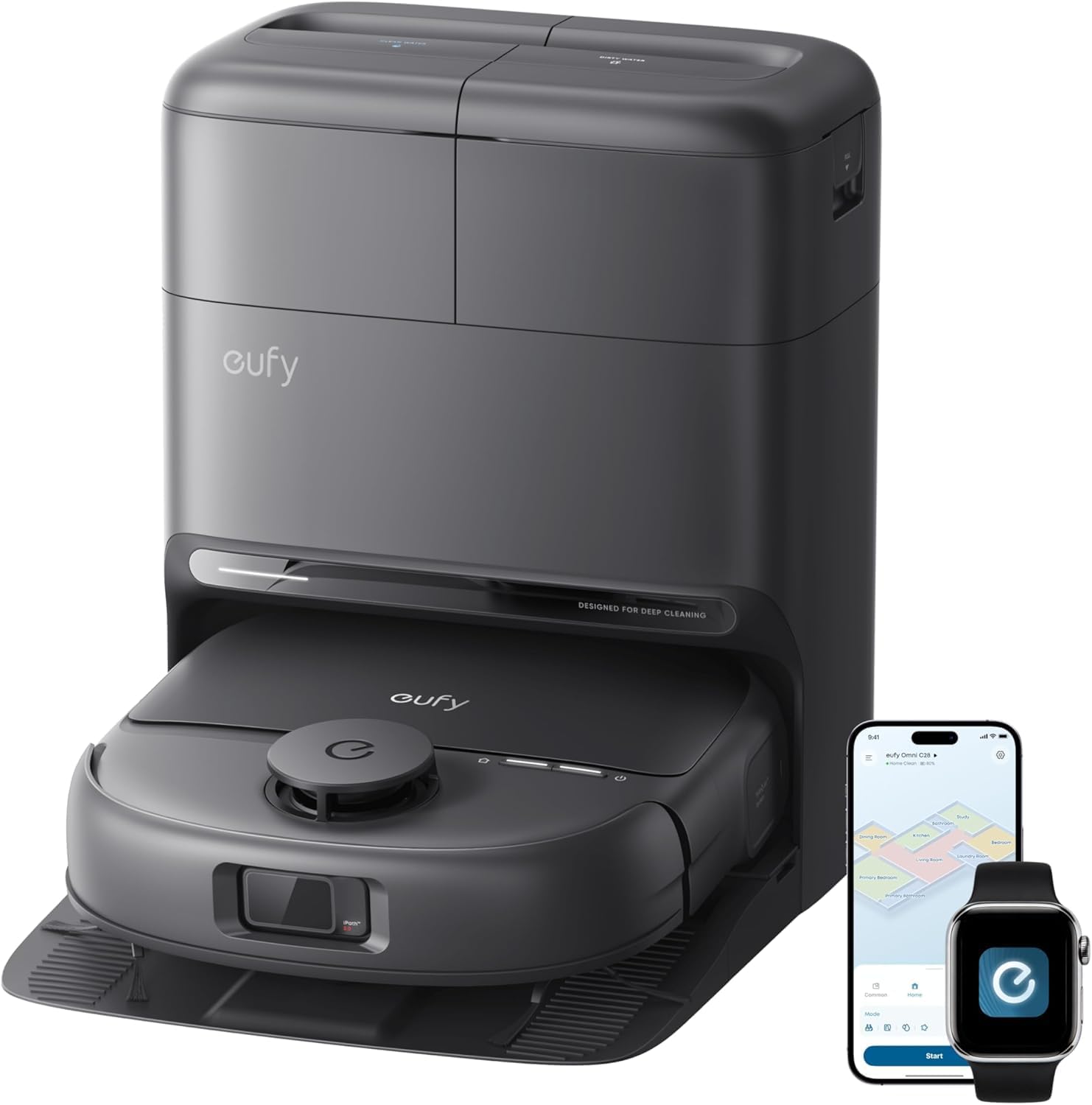
eufy C28 Omni, Robot Vacuum Cleaner with Mop,HydroJet Self Clean Roller Mop
A step-down robot vacuum and mop, same HydroJet self-clean rollers.
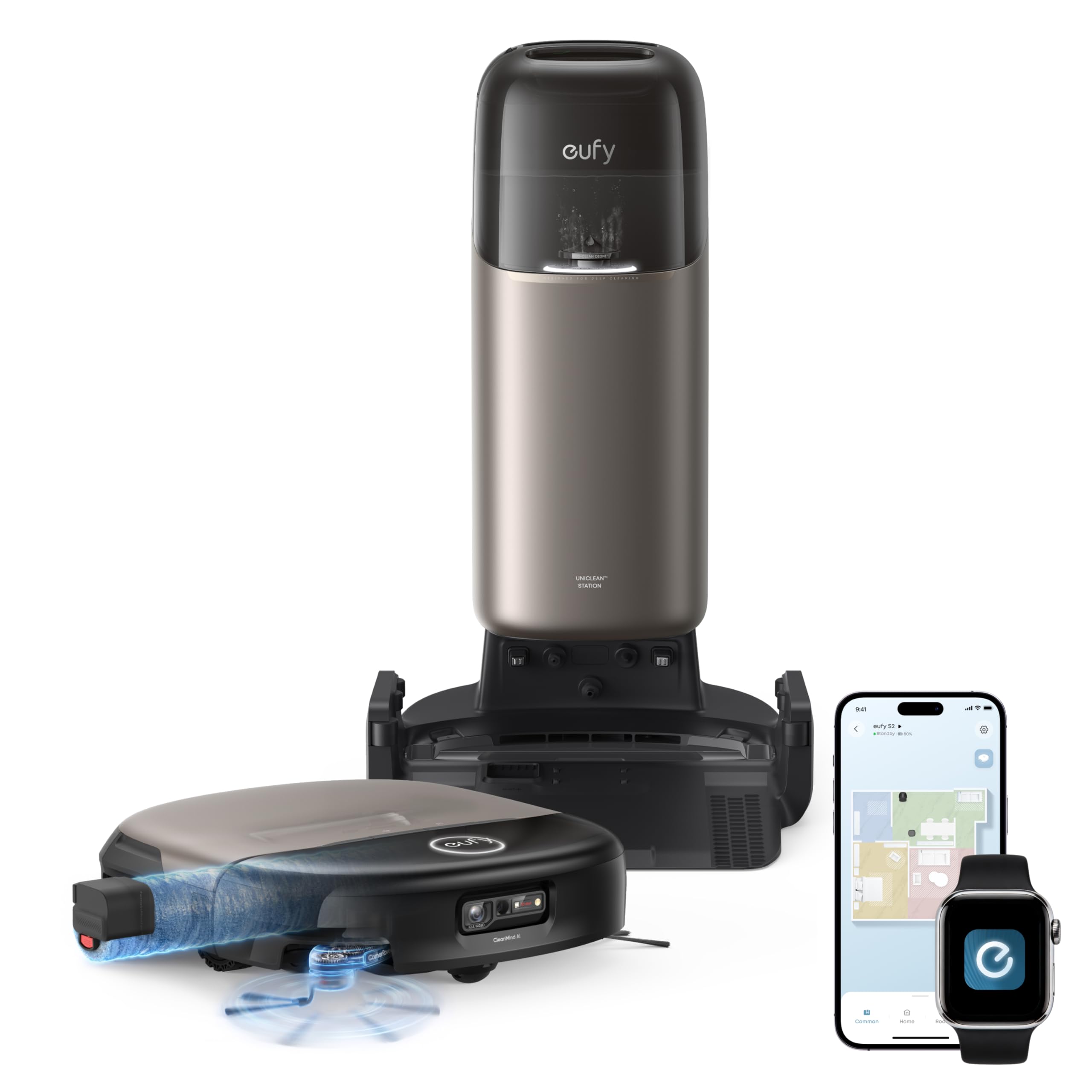
eufy Robot Vacuum and Mop Omni S2 2026 New,30,000 Pa Suction,Local Repair
A 2026 robot vacuum and mop with 30,000Pa suction and local repair.
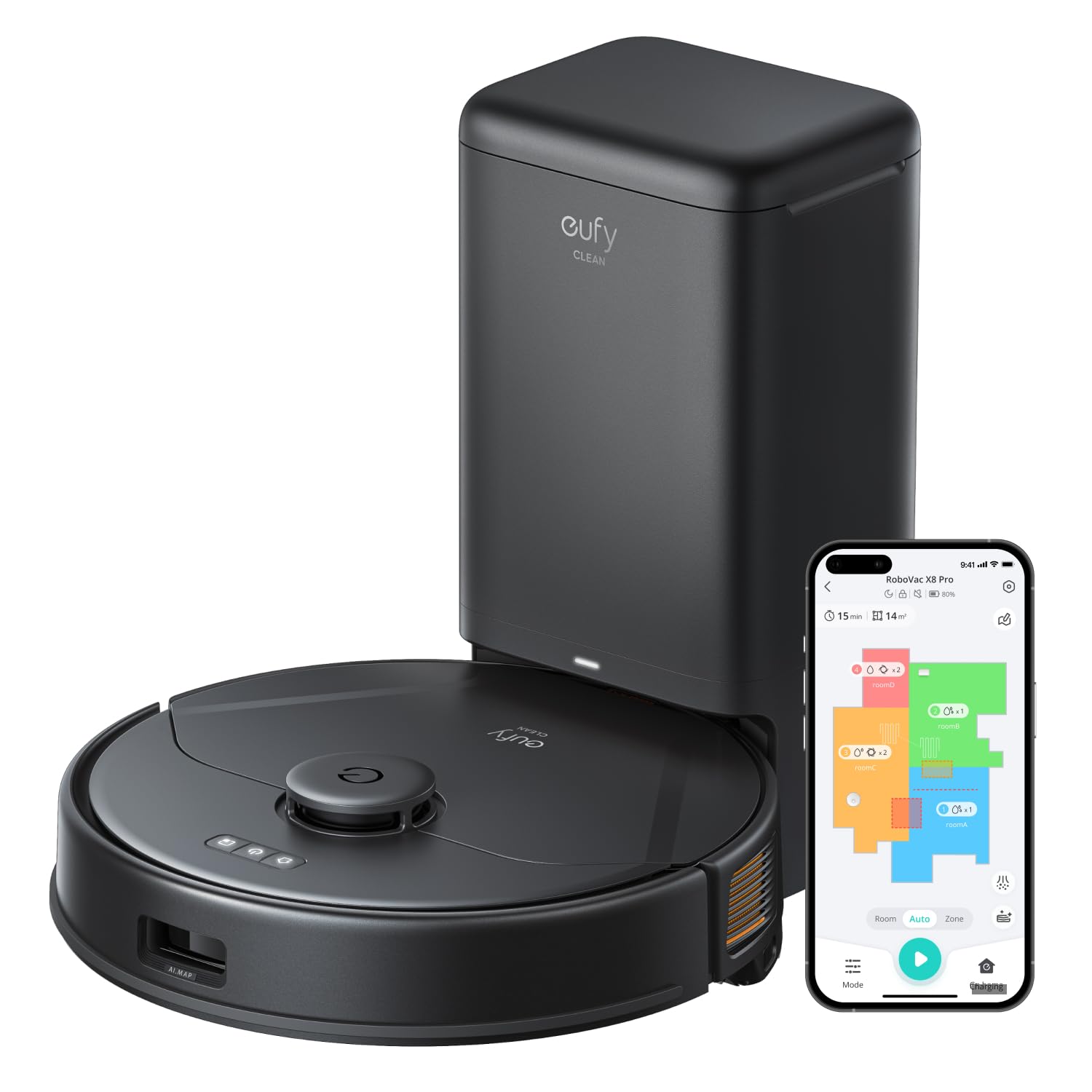
eufy X8 Pro Robot Vacuum Cleaner with Mop and Self-Empty Station
A robot vacuum with twin-turbine suction, self-empty station and detangling brush.
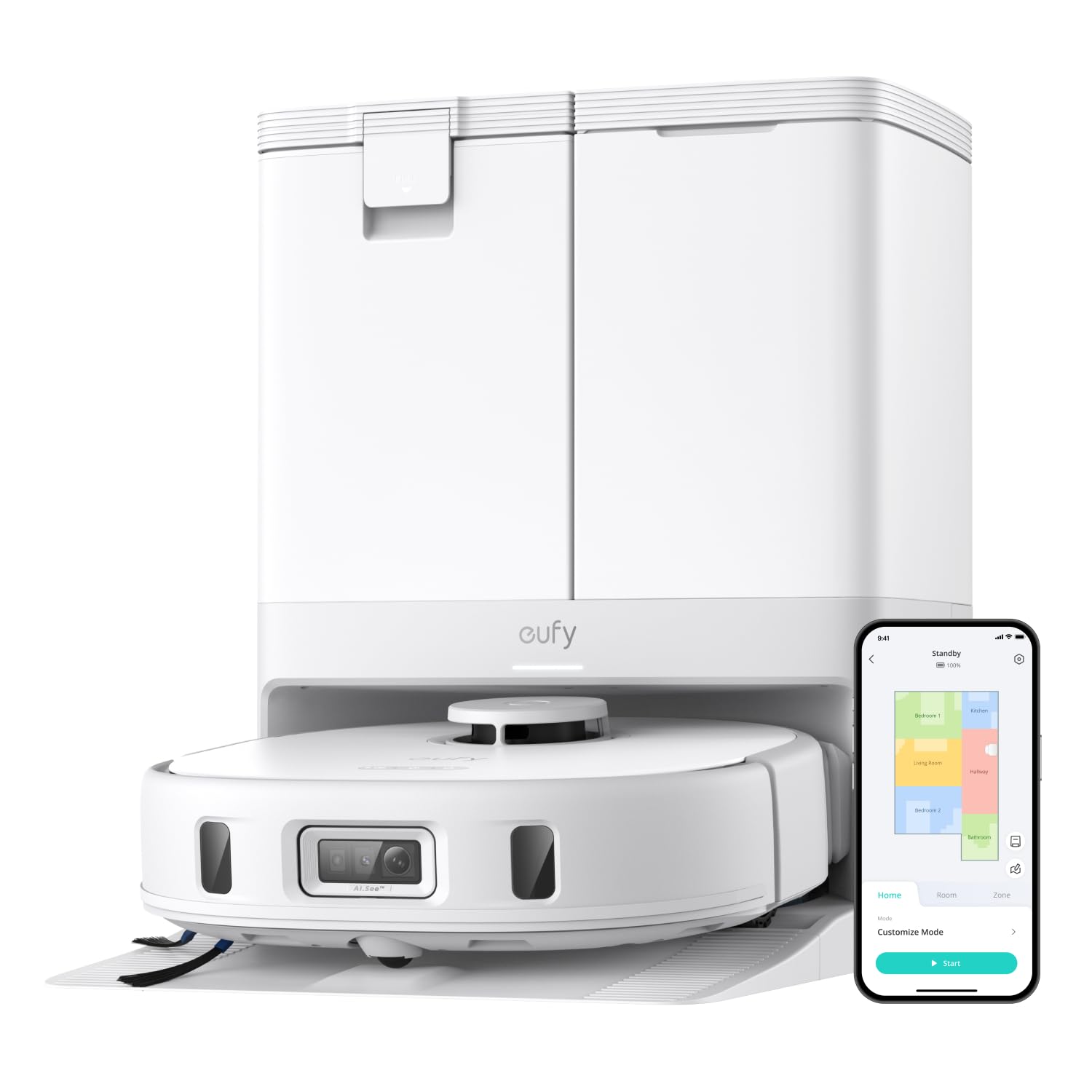
eufy X10 Pro Omni Robot Vacuum Cleaner with Mop, All-in-One Station, 8,000Pa Powerful Suction, Dual Mops, AI Obstacle Avoidance, Auto Mop Washing, Auto-Hot-Air-Drying
A robot vacuum with dual mops, 8,000Pa suction and AI obstacle avoidance.
Not seeing what you're after? Browse the official eufy store on Amazon for its full range.
Visit the eufy storeThe wider robot vacuum market: eufy vs Roborock, Shark, iRobot and Ecovacs
None of the models below are curated or price-checked on this site. Every figure was checked directly against the brand's own UK site or a major UK retailer on 3 August 2026, not pulled from a stale listicle.
| Model | UK price | Suction | Navigation | Self-empty capacity |
|---|---|---|---|---|
| eufy X10 Pro Omni (our value pick) | £311.20 | 8,000Pa | Camera + AI obstacle avoidance | Not published |
| eufy Omni S2 (our flagship pick) | £1,359 | 30,000Pa | Not published | Not published |
| Roborock Qrevo S Pro | £379.99 | 18,500Pa | PreciSense LiDAR | 65 days |
| Shark PowerDetect NeverTouch Pro | £399.99-£799.99 | Not published | 360° LiDAR + 3D sensor | 60 days |
| iRobot Roomba Max 775 Combo | £799 | 30,000Pa | ClearView LiDAR + PrecisionVision AI | 90 days |
| Ecovacs Deebot T30C | £349 | 20,000Pa | Laser distance sensor (LiDAR-type) | 90 days |
Worth being honest about: neither eufy nor Shark publish an independently-verified suction figure for every model, which is why 2 of the rows above show "not published" rather than a made-up number. A higher Pa figure also isn't a guarantee of better real cleaning, covered in the next section.
Is eufy as good as Shark, Roborock or iRobot?
TechRadar runs a dedicated Shark-vs-eufy comparison, and it doesn't crown one outright, the verdict is need-based. Shark's PowerDetect range wins on simplicity, space-saving and value; eufy wins if quieter, slimmer, lower-maintenance running and a wider mopping range across more price points matter more to you.
One independent 6-model test that included both brands plus Roborock and iRobot found Roborock ahead on navigation, carpet cleaning and app sophistication, with eufy winning specifically on mopping innovation, budget value and simplicity, exactly the ground eufy's curated range on this page is built on. That same test recorded zero self-empty jams for a Roborock model in testing, against one minor jam for a eufy X10 Pro Omni and three for an iRobot model, worth noting as one test's result rather than an industry-wide finding.
The honest summary: eufy isn't being sold here as the outright best robot vacuum brand on every axis. It's curated for real strengths, mopping technology, price and simplicity, not a claim to beat every rival on raw suction or navigation sophistication.
LiDAR vs camera navigation, and what suction Pa actually means
LiDAR (laser-based mapping) and camera-based navigation both build a map of your home to plan cleaning routes and avoid obstacles; LiDAR spins a laser to measure distances directly, while a camera system relies on visual recognition, generally needing more light to work well. Every rival in the comparison table above, including iRobot's own current Combo range, has moved to LiDAR or a LiDAR-type laser sensor, a genuine shift from the camera-based vSLAM navigation older robot vacuums used. eufy's own curated X10 Pro Omni is the exception here, still running camera-based AI obstacle avoidance rather than LiDAR, while the flagship Omni S2 doesn't publish which type it uses.
Suction is measured in Pascals (Pa), and a bigger number looks like a simple "better" signal, but real testing shows it isn't the whole story. T3's own review of the Roborock Qrevo S Pro, rated at a real 18,500Pa, still found that figure "isn't strong enough to lift all daily debris" in practice. RTINGS' own comparison of two of eufy's own legacy models found the same pattern in reverse: the older, lower-spec RoboVac 11S (1,300Pa) was "much better than" the newer 30C (1,500Pa) at cleaning carpet specifically, despite having the smaller number and no app.
The practical takeaway: use the Pa figure as one input, not the deciding one, brush design, floorhead engineering and real independent test results matter just as much as the headline number on the box.
The self-emptying, self-washing station: what you're actually paying for
The base station is a real ongoing cost beyond the purchase price. A genuine 6-pack of eufy's own dust bags for its self-empty models is £19.99 direct from eufy's UK site; eufy doesn't publish a recommended replacement interval, so budget for it as a recurring cost rather than a one-off purchase. Capacity varies by rival too, from around 60-65 days on Roborock and Shark's docks up to roughly 90 days on iRobot's and Ecovacs's.
The mop-washing side is where the flagship Omni S2 does something genuinely different. Rather than just a hot-water rinse, per Tom's Guide's own CES 2026 coverage, its base station generates a hypochlorous-acid and ozone-water solution that mixes with tap water in the tank specifically to address hygiene, eufy's own claimed figure is a 99.99% pathogen kill rate. We looked specifically for a genuine "the tank smells" complaint pattern from real UK owners to justify how big a problem this actually solves, and couldn't verify one from a credible UK source, so we're not overstating it as a common complaint. It's a real, forward-looking feature on the Omni S2, not a fix for a widely-documented problem.
Every rival in the table above with a self-washing mop also uses a hot-water wash (mostly 75°C) plus a warm-air dry, the same basic mechanism as eufy's other 4 models; the Omni S2's disinfecting step is the one genuine point of difference we could verify.
Genuine downsides of a robot vacuum
Which?'s own buying guide states it plainly: even the smartest models using the most sophisticated sensor technology can get caught on loose cables, rugs and coffee table legs. Real UK owners on MoneySavingExpert's forum back that up directly: one describes lamp leads with enough play to get caught in the brush roll, another notes cables and "stringy things" all get tangled, and a third points out you need a permanent spot reserved for the base station near a socket, worth planning for before buying rather than discovering it afterwards.
Dark carpet is a genuine, documented limitation rather than a one-off glitch: both iRobot and Roborock publish their own dedicated support articles on it. Infrared cliff sensors, which exist to stop a robot vacuum at a real drop-off like a step, can misread black, navy or dark brown carpet the same way, since dark surfaces absorb infrared in a way that looks similar to an actual edge to the sensor.
Which?'s own lab testing, run with real cereal, lentils and jam or honey spills, found robot vacuums generally can't match a standard vacuum on deep carpet cleaning and struggle in corners and crevices a handheld nozzle reaches directly; in their mop tests, jam and honey residue congealed on components, and some self-cleaning docks "couldn't clear the grime" afterwards. None of this makes a robot vacuum a bad buy, it makes it a maintenance tool between proper cleans, not a full replacement for one.
How long does a robot vacuum actually last?
No UK consumer body publishes a surveyed lifespan figure for robot vacuums specifically, unlike the reliability surveys Which? runs for categories like washing machines. Treat the commonly-quoted 4 to 6 years as industry consensus rather than a measured statistic, with the battery, not the motor or mechanism, the usual limiting factor.
One real account on MoneySavingExpert's forum describes a robot vacuum bought in 2015 still working in 2021, six years on, with a few battery changes along the way, one anecdote rather than a study, but it matches the general pattern of the battery, not the machine itself, being what eventually needs replacing.
eufy RoboVac 11S vs 30C, and what eufy's 2026 range replaced them with
A genuinely counterintuitive result: RTINGS' own comparison of these two older eufy models found the simpler, cheaper 11S (1,300Pa, no WiFi or app) performs better than the newer 30C (1,500Pa, WiFi and app control added) at cleaning carpet specifically, despite the 30C's higher stated suction. Both are now discontinued.
eufy's current 2026 range replaced them entirely, and the 5 models curated on this page span it: the budget C-series (4,000-15,000Pa), the X10 Pro Omni, the E-series Omni E25/E28 (20,000Pa), and the flagship S-series Omni S2 (30,000Pa). If you're comparing an old "11S vs 30C" recommendation you found elsewhere, treat it as legacy advice, not a reflection of what eufy actually sells today.
About this page
LightningBrands curates and price-checks eufy's robot vacuum range, including all 5 models on this page. We don't sell, stock or price-check any of the other brands named above, so their specs are included as honest market context only, sourced from each brand's own site, a major UK retailer, or a named independent reviewer, never dressed up as our own deal or given a price we haven't verified live.